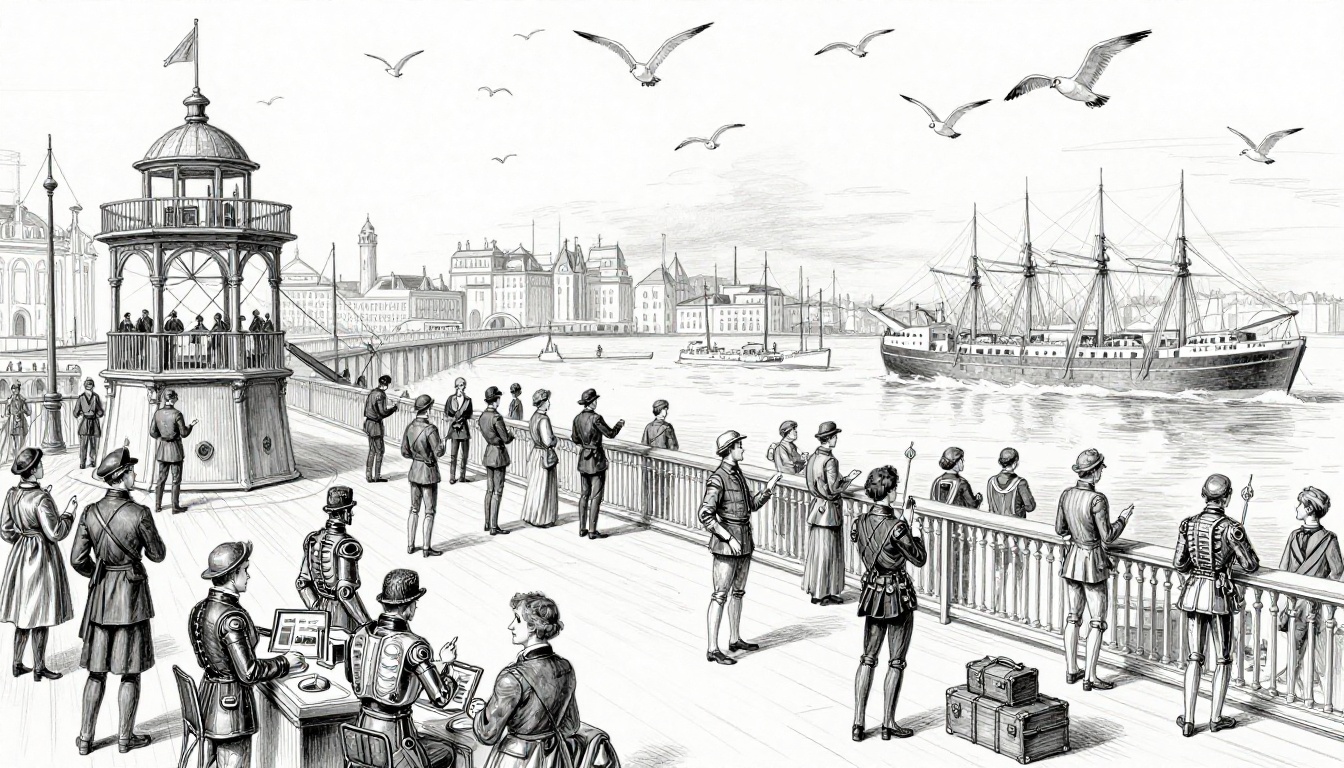
Travel in 2026: AI & Biometrics Enhance Journeys (Phocuswright)
January 6, 2026 • Source: Hotel News Resource
A new Phocuswright report forecasts that agentic AI and biometrics will fundamentally alter the travel landscape by 2026, enabling highly personalized booking experiences and frictionless airport processes. The shift emphasizes customized, meaningful travel journeys.
**Key Facts:** • Phocuswright predicts agentic AI will redefine travel booking by 2026. • Biometrics will streamline airport processes, enhancing security and reducing wait times. • Travel industry is shifting towards personalized and meaningful experiences. • OTAs and TMCs must integrate AI to remain competitive. • Hotels can leverage AI to create personalized guest experiences.
Agentic AI and biometric technologies are poised to revolutionize the travel industry by 2026, according to a new analysis from Phocuswright, promising a future where personalized experiences and streamlined processes redefine the traveler journey.
The Rise of Agentic AI in Travel Booking
Phocuswright's report highlights agentic AI as a key driver of change in travel booking. This technology moves beyond simple search and comparison, acting as a personal travel assistant that understands individual preferences and anticipates needs. By 2026, travelers can expect AI agents to handle complex itineraries, proactively suggest relevant options, and manage bookings end-to-end.
For Online Travel Agencies (OTAs) and Travel Management Companies (TMCs), this represents both an opportunity and a challenge. They must integrate AI capabilities into their platforms to remain competitive, offering travelers a more personalized and efficient booking experience. Those who fail to adapt risk being left behind as travelers increasingly rely on AI-driven solutions.
Airlines and hotels also stand to benefit from agentic AI. By integrating with these AI agents, they can better target their offerings to individual travelers, increasing booking conversion rates and revenue. The shift requires a focus on data-driven personalization and a willingness to experiment with new technologies.
Biometrics Transforming the Airport Experience
Beyond booking, biometrics are set to transform the airport experience. By 2026, expect widespread adoption of biometric identification at check-in, security, and boarding, significantly reducing wait times and enhancing security. This frictionless approach promises a more seamless and stress-free journey for travelers.
Airports will need to invest in the necessary infrastructure to support biometric identification, including facial recognition technology and biometric scanners. This investment will pay off in improved operational efficiency, reduced staffing costs, and increased passenger satisfaction. The challenge lies in ensuring data privacy and security while maximizing the benefits of this technology.
Airlines can leverage biometrics to personalize the in-flight experience. By identifying passengers using biometric data, airlines can offer tailored services, such as personalized entertainment options and customized meal choices. This level of personalization can enhance customer loyalty and differentiate airlines in a competitive market.
Focus on Personalized and Meaningful Experiences
The underlying theme of Phocuswright's report is a shift towards personalized and meaningful travel experiences. Travelers are no longer satisfied with generic itineraries and standardized services. They are seeking unique and authentic journeys that cater to their individual interests and preferences. AI and biometrics are key enablers of this trend, allowing travel providers to deliver highly customized experiences at scale.
For hotels, this means moving beyond basic amenities and focusing on creating personalized guest experiences. By leveraging AI to understand guest preferences, hotels can offer tailored recommendations, anticipate needs, and create memorable moments. This approach can drive customer loyalty and increase revenue through upsells and cross-sells.
Tour operators and activity providers can also benefit from this trend. By using AI to personalize itineraries and offer unique experiences, they can attract a new generation of travelers who are seeking authentic and immersive journeys. The key is to understand individual motivations and preferences and to curate experiences that resonate with them on a personal level.
Published January 6, 2026
More NewsLast updated: February 27, 2026